In the world of industrial manufacturing, solvents are essential. They are used to clean machinery, dissolve materials, and create products like paint and glue. However, solvents are also dangerous. They can be flammable, toxic, or harmful to the environment.
Because of these risks, shipping and storing chemicals requires a very specific type of label. This is not just a matter of choice—it is a matter of international law. In this article, we will explore the world of GHS labels and why they must be built to survive the very chemicals they describe.
1. What is GHS? (A Universal Language)
GHS stands for the Globally Harmonized System of Classification and Labeling of Chemicals. Before GHS existed, different countries had different rules for labeling chemicals. This was confusing and dangerous for international trade.
Imagine a worker in China shipping a drum of solvent to a factory in Germany. If the warning labels were different, the German worker might not understand how to handle the chemical safely. GHS solved this by creating a “universal language” for safety.
The 6 Key Elements of a GHS Label
Every GHS-compliant label must include six specific pieces of information:
-
Product Identifier: The name of the chemical.
-
Signal Word: Usually “Danger” (for severe hazards) or “Warning” (for less severe hazards).
-
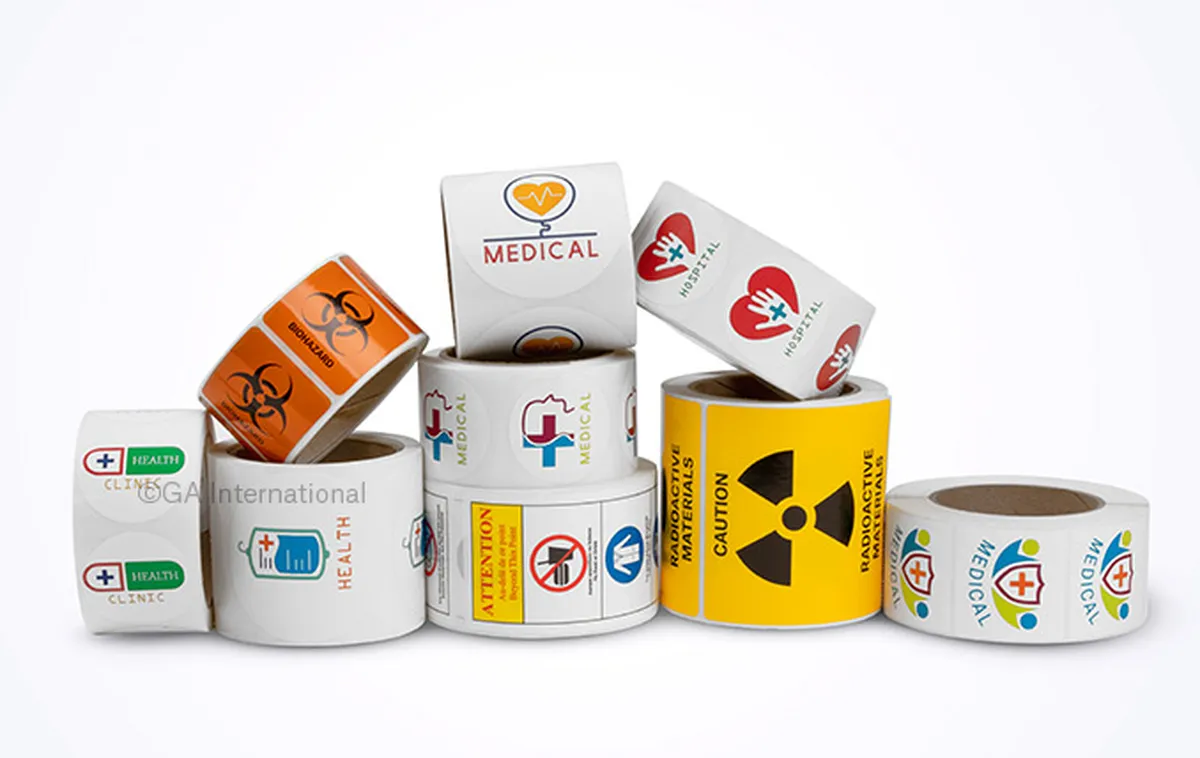
GHS Pictograms: Red diamond-shaped symbols that show the type of hazard (e.g., a flame for flammability).
-
Hazard Statements: Phrases describing the nature of the danger (e.g., “Causes serious eye irritation”).
-
Precautionary Statements: Instructions on how to minimize exposure (e.g., “Wear protective gloves”).
-
Supplier Information: The name and contact details of the manufacturer.
2. The Challenge: Chemicals That “Eat” Labels
The biggest problem with labeling industrial solvents is the solvent itself. Solvents are designed to break things down. If a bottle leaks or a drum is splashed during filling, the chemical will touch the label.
Why Ordinary Labels Fail
-
Dissolving Ink: Many solvents act like “ink remover.” If you use a standard printer, the solvent will wash the text away, leaving a blank white sticker. This is extremely dangerous because workers won’t know what is inside the container.
-
Weakening Glue: Chemicals can seep under the label and dissolve the adhesive. The label will then peel off and get lost.
-
Extreme Shipping: Chemical drums are often shipped on large boats across the ocean. They face saltwater, high humidity, and intense heat.
3. The Solution: Chemical-Resistant Technology
To ensure a label stays readable for years, manufacturers use specialized materials and printing techniques. This is often referred to as BS5609 compliance (a British standard for labels used in marine environments).
Durable Materials
Instead of paper, GHS labels use Synthetic Films (like Polyester or Polypropylene). These materials do not soak up liquids and are very difficult to tear.
Specialized Adhesives
The glue used on these labels is “high-performance.” It is designed to bond with plastic or metal drums and remain sticky even if it is splashed with harsh chemicals or soaked in saltwater.
Resin Ribbon Printing
Rather than using standard ink, industrial label printers often use Thermal Transfer Resin Ribbons. The printer uses heat to “melt” a plastic-like resin onto the label surface. This creates a bond that is resistant to scratching and chemical melting.
4. Why Compliance Matters for Your Business
If you are a business owner selling industrial solvents, high-quality labeling is your best insurance policy.
-
Avoiding Massive Fines: Governments around the world (like OSHA in the US or ECHA in Europe) strictly enforce GHS rules. If your labels are missing or unreadable, you can face fines costing thousands of dollars.
-
Smooth International Trade: Customs officers check labels at borders. If your labels are compliant, your products move through ports quickly. If they aren’t, your shipment could be seized or sent back.
-
Worker Safety: The most important reason is the human element. Clear labels prevent accidents, fires, and chemical burns. A label that stays attached and readable saves lives.
Summary: Safety You Can Depend On
A GHS label is more than just a sticker; it is a vital safety tool. For industrial solvents, you cannot afford to use cheap materials. By choosing chemical-resistant, GHS-compliant labels, you protect your workers, your reputation, and your bottom line. In a world of dangerous chemicals, a durable label is the first line of defense.